

Transactional emails for customer retention: Best practices for e-commerce
For most, email marketing brings to mind colourful campaigns, loud promotional emails, product launches, and punchy newsletters. Yet, any email marketer worth their salt would argue it’s the emails working in the background that matter most.
Order confirmations, shipping updates, password resets, subscription notifications, they sound like the more boring lot (they are), but transactional emails are arguably the most important. Functional by nature, they shape how customers experience your brand. They are your customer service before you even need customer service.
They also generate the highest engagement of any emails, so they present a great opportunity to do a little more while you’ve got your customers listening (as long as you don’t do too much).
Build trust, reduce friction and create natural opportunities for repeat purchases. Here’s how to get the most out of transactional emails with examples.
What exactly are transactional emails?
Transactional emails are always automated, triggered by specific customer behaviours and set off to deliver a chain of information directly related to that behaviour.
These actions include website or app purchases, password resets and account updates. Unlike marketing emails, they are functional and time-sensitive. They also do not require unsubscribe links.
Common examples include:
Order confirmations
Shipping and delivery updates
Refunds or returns notifications
Password resets
Account activation messages
Subscription renewals
Payment confirmations and receipts
Customer service replies
Why transactional emails matter so much for retention
Transactional emails land at moments of high intent. A customer has just placed an order, is waiting for a delivery, or is trying to access their account. Attention is naturally high. This is why they generate such high open and click rates.
They build trust at critical moments
Fast and useful transactional emails reduce anxiety and, therefore, friction. Timely order confirmations reassure, shipping updates prevent “Where is my order?” tickets, password resets protect security and confidence.
They shape the post-purchase experience
The post-purchase window is one of the most emotionally charged moments in the customer journey. Customers are engaged, curious and highly receptive.
Transactional emails set expectations, reinforce brand tone and share helpful information. This stage drives more repeat purchases than standalone campaigns.
They create meaningful, personalised touchpoints
Transactional emails are some of the most consistent interactions you have with your customers. They’re timely, relevant and expected, so they’re great for building trust and making the buying experience feel more reliable.
These little touchpoints basically give your brand a good reputation and build a better relationship with your customers over time.
The transactional emails you should set up right now
Every transactional email supports a different part of the customer journey.
1. Order confirmations
These confirm that a transaction has been completed and provide purchase details that your shoppers might find useful.
Examples:
Confirmation of purchase
Payment receipt
Shipping confirmation and details
Delivery confirmation and timeframe
Refund or cancellation notices
Customers open these emails multiple times while tracking their purchase, so you can send a few and maximise value.
Enhance shipping and delivery emails with subtle product recommendations or educational content. This can drive incremental revenue without disrupting the core informational purpose.
2. Account and security emails
These support login, account creation and security actions.
Examples:
Account creation confirmations
Email verification
Password resets
Two-factor authentication messages
Speed and clarity are essential here. Delays create frustration and can quickly erode trust. These emails should prioritise simplicity and reliability above all else (basically, don’t bombard your customers with upsells here).
3. Subscription and membership emails
These manage ongoing customer relationships and payments.
Examples:
Subscription confirmations
Renewal reminders
Trial ending alerts
Failed payment notifications
Clear reminders and timely delivery reduce churn and protect recurring revenue.
4. Policy and legal notifications
These communicate essential operational updates. Boring stuff, but regulatory necessary.
Examples:
Privacy policy updates
Terms of service changes
Security alerts
Keep these simple, transparent, and focused for clarity and compliance.
Best practices: What to include (and not include) in transactional emails
The strength of transactional emails lies in clarity. Customers open them for answers and not promotions. But clarity doesn't mean bare-bones. There's always a way to make emails work a bit harder without crossing the line.
What to include
Transactional messages should contain:
Clear details about the action taken
Relevant order or account information
Any next steps required
Support links if something goes wrong
Your branding (logo, colours, tone of voice)
A mobile-optimised layout
Send time relevance ie. they’re triggered immediately or as close to the action as possible
What to avoid
Transactional emails should not include:
Heavy promotional messaging (be sure to comply with local regulations)
Aggressive upsells (keep it relevant and appropriate)
Discount codes unrelated to the transaction
Newsletter content
Misleading subject lines that obscure the nature of the message
Do or don’t: Promotional content in transactional emails
There is room for soft marketing within transactional emails, a relevant product recommendation after a purchase or loyalty programme nudge, but only when it doesn't compromise the primary message.
In Klaviyo, this is managed through how you classify and configure your email sends, and it is worth being deliberate about which emails sit in your transactional stream versus your marketing flows.
Regulatory compliance
Transactional messages should remain service-led, both to meet local consent requirements and to reinforce trust. Under GDPR and CAN-SPAM, emails that are primarily promotional cannot be sent as transactional messages to bypass consent requirements.
The rule of thumb: if the primary purpose is a commercial message, it needs consent. If it is a genuine service communication with a light marketing touch, it can qualify as transactional, but the service content must lead.
Klaviyo recommends keeping transactional emails clearly scoped to their purpose and ensuring your consent and suppression settings are correctly configured so the right messages reach the right people, regardless of subscription status.
Get inspired: 5 transactional email examples and why they work
Everlane - Shipping Confirmation
This order confirmation answers two questions every transactional email should: what happened? And what should I do next?
The primary CTA is action-driven, while the secondary CTA serves as a list growth opportunity for SMS. The product summary reinforces the purchase decision and the design is clean and minimal.
The referral programme placement is a nice touch. A shipping confirmation arrives when anticipation is high and sentiment is positive, making it one of the best moments to encourage referrals.
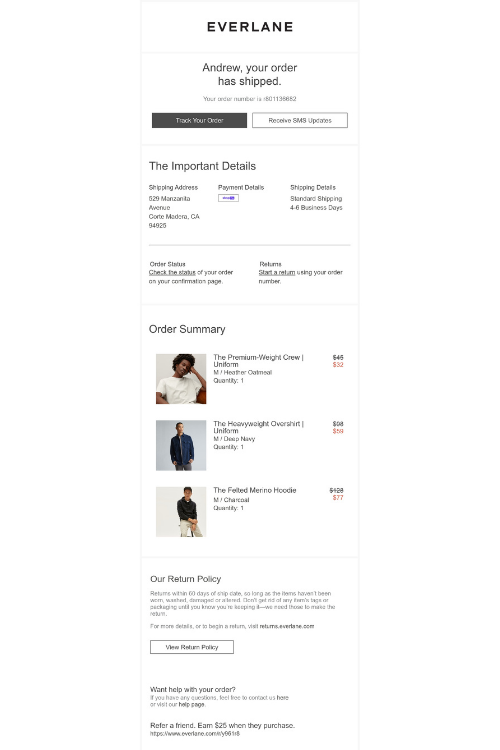
Image source: Really Good Emails
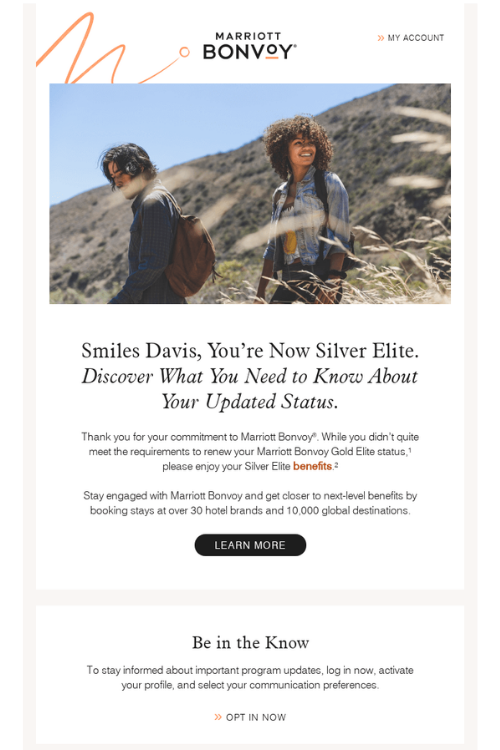
Marriot - Loyalty Status Update
This one goes a little bit further than your standard status update. It delivers information clearly, but also reinforces value, focusing on benefits and next steps.
They also manage a high-risk churn moment well by keeping the user engaged and encouraging future action rather than highlighting where they fell short (in this case, not qualifying for ‘Gold Elite status’). Simple, but massive for retention.
Source: Really Good Emails
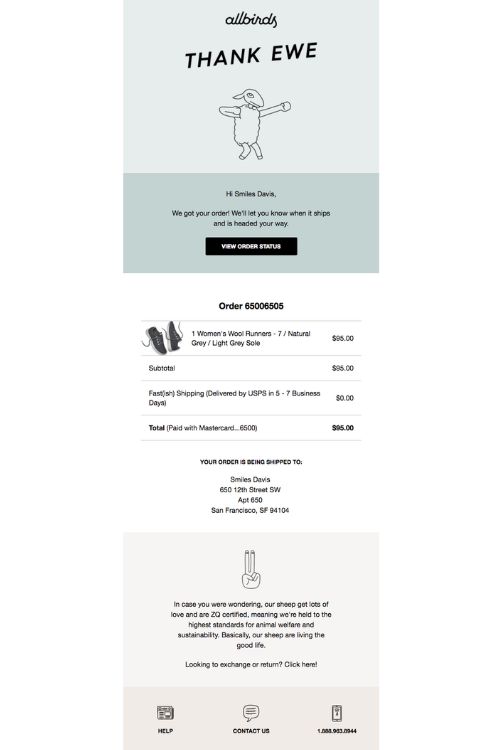
Allbirds - Order Confirmation
A strong example of a transactional email that balances function with brand. It’s easy to scan with strong layout hierarchy, but it’s layered with personality. It also reinforces trust and reduces friction with clear CTAs, accessible support options, and thoughtful brand messaging.
Source: Really Good Emails
Sundays - Abandoned Cart Reminder
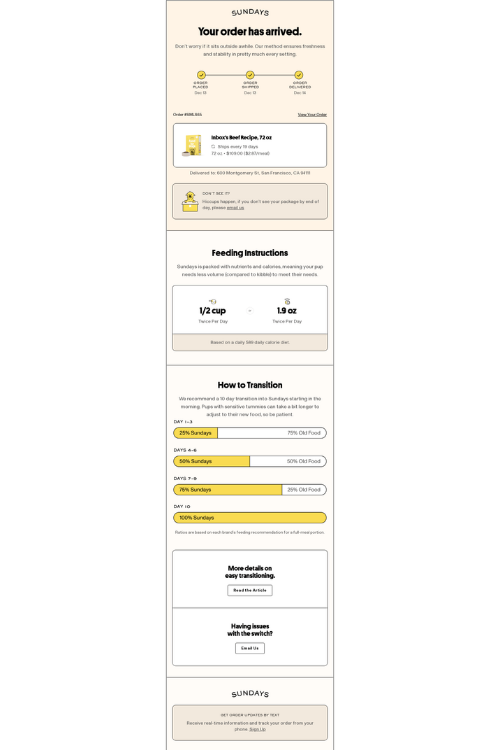
How do you add value beyond the core update? This email clearly confirms delivery, but immediately follows with practical guidance on how to use their product, reducing uncertainty at a key post-purchase moment.
It’s also built for retention. Education, onboarding, and support are layered in naturally to prevent churn and encourage engagement. There’s even a subtle cross-channel prompt, adding without feeling intrusive.
Source: Really Good Emails
Final Thoughts
Transactional emails might not seem all that exciting, but they shape how customers experience your brand at some very important moments.
The highest-performing DTC brands don’t set up these flows and then forget about them. Transactional emails should be treated as living, breathing assets, regularly audited through the eyes of a customer.
Prioritise high-impact touchpoints, like order and shipping confirmations, improve clarity and design, and layer in subtle value such as helpful content or relevant recommendations.
Transactional emails are all about reducing friction, so make sure they do exactly that.
If your transactional flows haven’t been reviewed recently, it might be time to give them a second look (or have someone else do it). If you’d like support, our boutique team of Klaviyo experts would be happy to help.