Centralising Customer Experience with Klaviyo Customer Hub
As the year gets underway, teams are reassessing how their customer experience actually works in practice. It’s less about reinvention and more about small, deliberate changes that reduce friction and improve consistency over time.
Customer experience often becomes fragmented by default. Orders live in one place, loyalty in another, support somewhere else entirely. Individually, these systems might work well. Together, they can feel disjointed to customers, even if nothing is technically broken.
Klaviyo’s Customer Hub is designed to bring those moments back together, creating a more connected experience for shoppers and a more sustainable one for internal teams.
What is Klaviyo Customer Hub?
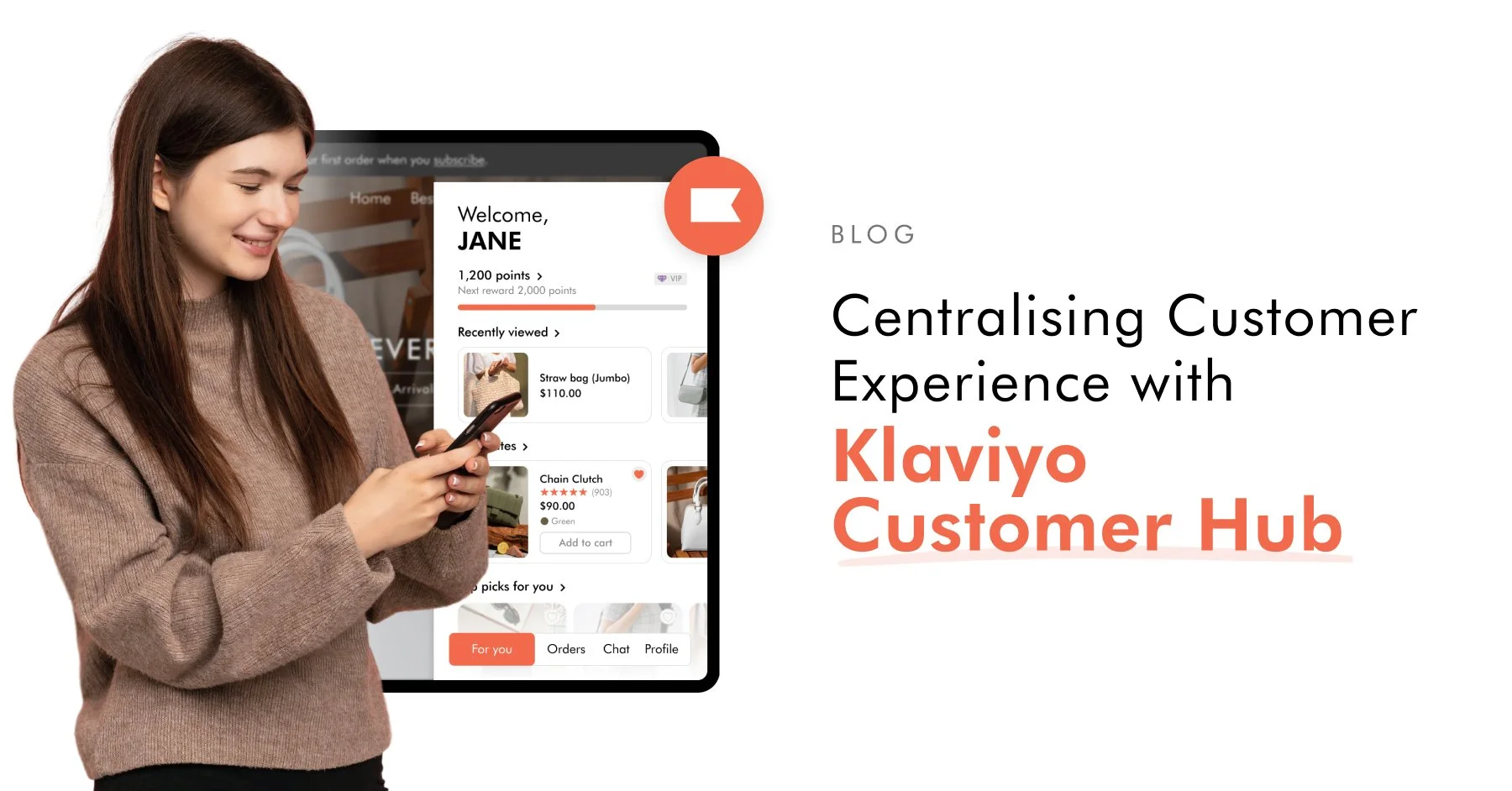
Klaviyo’s Customer Hub is an on-site customer experience that centralises key parts of the customer journey into a single, accessible interface. It replaces the traditional account page with a sliding drawer or floating panel that customers can open from anywhere on your site.
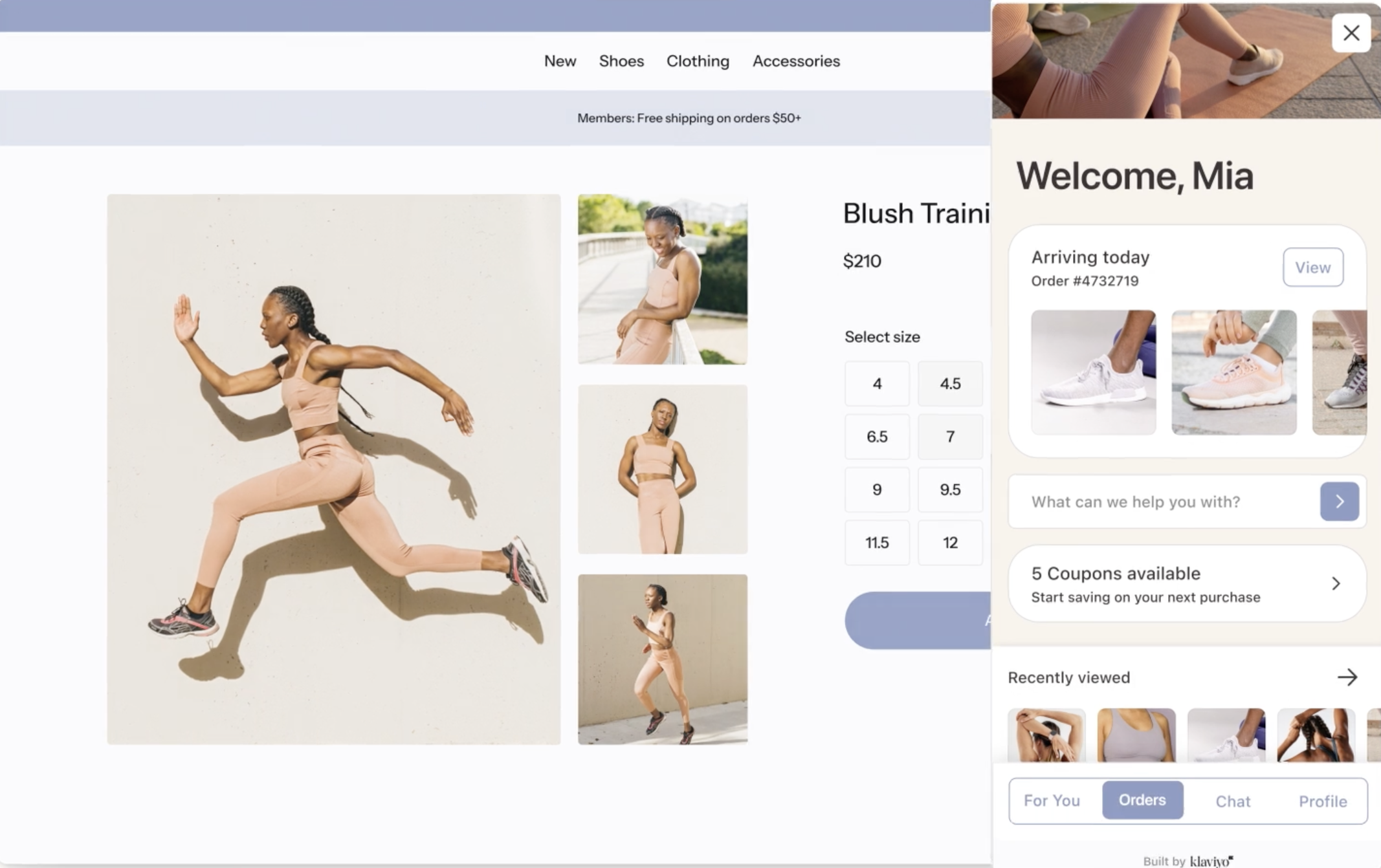
Within that panel, shoppers can manage their account, track orders, view favourites, access personalised product recommendations, redeem offers, check loyalty status, and get support. All of this is powered by the same customer data already flowing through Klaviyo.
Customer Hub is built on klaviyo.js and requires no additional development work. Brands can launch it quickly and customise it using configurable content blocks, without redesigning their storefront or building custom account functionality from scratch.
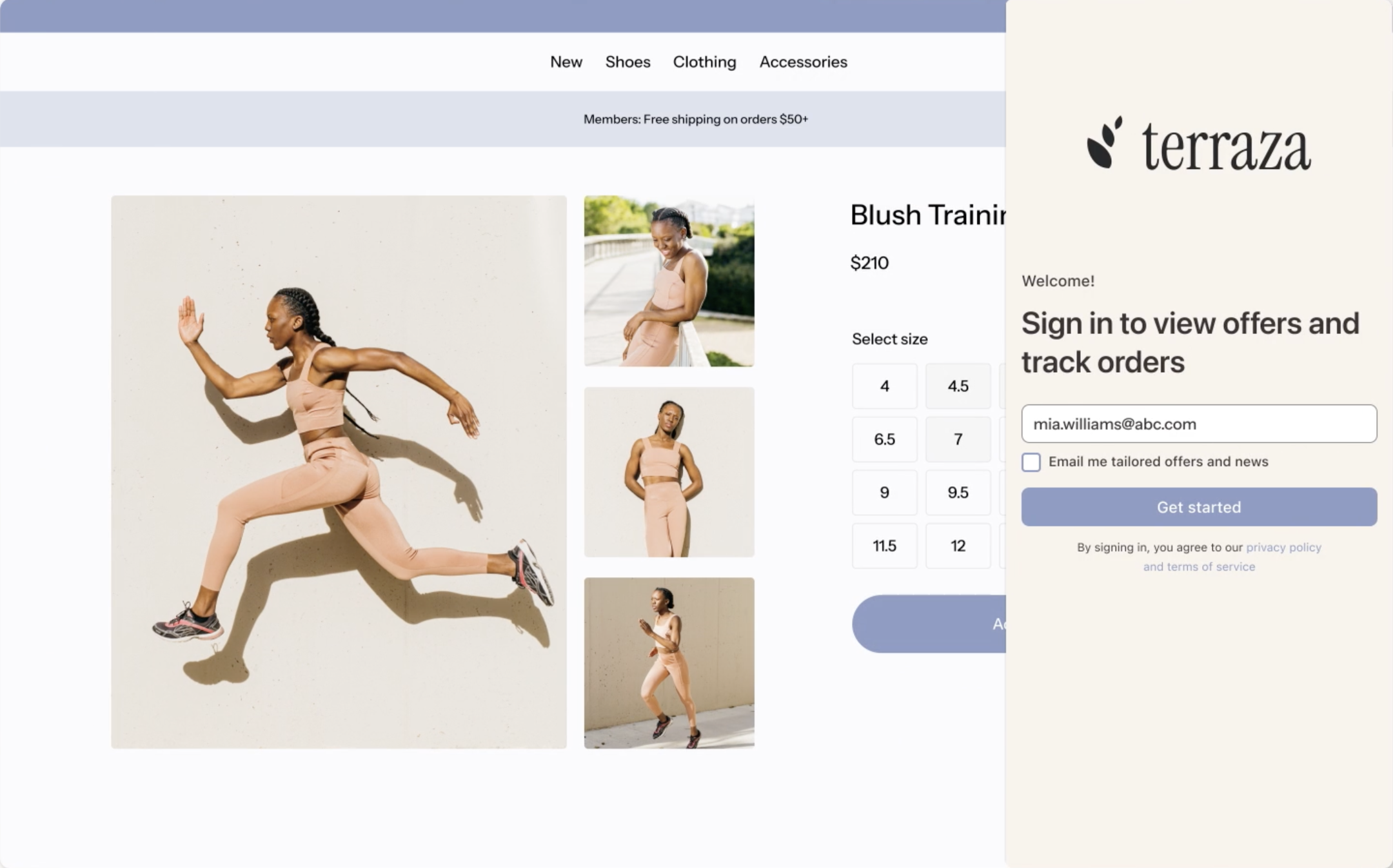
Importantly, it works for both logged-in and anonymous visitors. Even before someone signs in, Customer Hub can surface recently viewed products, saved items, FAQs, and support options. Once a shopper logs in, that activity is consolidated into their Klaviyo profile and used to personalise future experiences across channels.
A more connected customer experience
Customers don’t experience brands in channels. They experience them as a whole.
They browse on mobile, compare options elsewhere, purchase later, and return when they need help. What they notice is whether those moments feel connected or fragmented.
When information is scattered across tools and pages, friction creeps in. Customers have to search for order updates, dig through emails for discount codes, or guess where they stand with loyalty rewards. Over time, that effort erodes trust.
Customer Hub creates a single, consistent place for the relationship. Orders, rewards, support, and personalised content live together, shaped by what Klaviyo already knows about each shopper.
The result is an experience that feels intentional. Customers don’t have to reset, explain themselves, or switch between tabs because they can see what’s happening, understand their status, and move forward with confidence.
Loyalty plays a role here too. When points, rewards, and progress are visible and easy to redeem, loyalty feels integrated rather than something running in the background.
Source: Klaviyo
Built for action over passive browsing
Customer Hub is ultimately designed to help customers take action quickly and independently.
From one interface, shoppers can:
Track orders and shipping progress
Start returns without contacting support
Redeem loyalty rewards
Apply discount codes directly
Save products or access personalised offers
This matters most after purchase, when your shoppers are most likely to have questions. Order tracking alone accounts for a significant share of support requests. Customer Hub gives shoppers the answers instantly, without digging through inboxes or waiting on replies.
Personalisation happens naturally inside this experience. You can surface relevant messages based on behaviour, lifecycle stage, or loyalty status with Klaviyo’s segmentation and content blocks. VIPs see early access, new customers see welcome incentives, at-risk customers see re-engagement offers, and so on. This personalisation can go even further using profile properties stored in Klaviyo. Customer Hub supports dynamic content, meaning anything saved to a profile can be displayed directly in the interface. For example, {{ person.firstname }} can be used to greet customers by name, and custom properties such as loyalty points can be shown even if they come from tools without a native integration.
Because everything lives inside a consistent interface, personalisation feels calm and contextual rather than disruptive.
For brands, this is measurable. Interactions with offers, self-service tools, and account features can be tied directly to revenue, retention and support volume. That makes it easier to optimise over time and prove the impact of the experience.
Value starts before login
Personalisation doesn’t need to be complex to be effective. At a basic level, product feeds automatically populate emails with products from your catalogue, based on rules you define.
One of the great things about Customer Hub is that it doesn’t require shoppers to be logged in.
Traditional account pages only come into play after authentication, which means a large portion of traffic never sees any value from them. But Customer Hub can support discovery, support, and engagement even while a shopper remains anonymous.
When a customer eventually signs in or creates an account, those behaviours don’t disappear. They’re connected to the shopper’s Klaviyo profile and become part of the data that informs future personalisation across email, SMS and onsite experiences.
Customer Hub also works with existing Shopify customer accounts, whether you’re using the new or legacy account system. Order history, account details and login credentials remain the same, while the experience around them becomes more dynamic and useful.
Once live, Customer Hub takes over the standard account experience, providing a flexible on-site interface accessible from anywhere on the site. Shoppers use the familiar account icon or the /account page, but instead of static pages, they enter a personalised environment designed around shopping, self-service and support.
The result is continuity. Customers don’t need to understand how your systems are set up or when they’re “in” an account area. The experience simply adapts as their relationship with the brand deepens.
A simple guide to getting started
Getting started with Klaviyo Customer Hub is intentionally straightforward. The process is designed to be incremental so you can launch quickly and refine over time.
Step 1: Enable Customer Hub in Klaviyo
From Klaviyo’s main navigation, go to the Customer Hub section under Service, then start the guided onboarding. This activates your free trial and walks you through the core setup.
Step 2: Customise the look and discovery points
Apply your branding and configure how customers access it. This typically includes updating the account icon behaviour and enabling a floating widget so shoppers can open Customer Hub from anywhere on your site.
Step 3: Add content blocks and personalise the experience
Choose from pre-built content blocks or create your own. You can surface loyalty points, personalised product recommendations, favourites, offers, FAQs, or subscription details, and control which blocks appear for different customer segments.
Step 4: Enable relevant extensions and integrations
Customer Hub connects with a growing ecosystem of e-commerce tools. As of February 2026, this includes integrations with platforms like Smile.io and Yotpo (loyalty), Recharge and Skio (subscriptions), Okendo (reviews and UGC) and more. These integrations allow your customers to check points balances, manage subscriptions, redeem rewards, track orders and access support all without leaving your site or contacting customer service.
You can view a full list of the industry-leading platforms you can integrate with Klaviyo Customer Hub here.
Step 5: Preview and set live
Use the View live button to preview and test the experience across different customer states, including logged-in and anonymous visitors. Once ready, set Customer Hub live.
Step 6: Monitor performance and iterate
After launch, review the Customer Hub dashboard to understand how customers are engaging. Use these insights to refine content, adjust personalisation, and align the hub more closely with your retention and support goals
Final Thoughts
Klaviyo Customer Hub isn’t about adding more features for the sake of it. It’s about bringing existing moments together into a single experience that feels consistent, personal, and genuinely useful.
For brands looking to strengthen customer relationships, it offers a practical way to improve experience, data quality, and retention without adding unnecessary complexity. If you need any extra guidance on getting started, don’t hesitate to get in touch.