Top Klaviyo Features To Transform Your Email Strategy

By the time most brands feel the need to change their email strategy, performance has already started to slip. Engagement declines and campaigns feel repetitive. Nothing is technically “broken”, but things feel a little less effective than they once did.
The end of the year is often when those patterns become more visible. Not because something suddenly goes wrong, but because it’s one of the few moments where there’s space to look at your setup with fresh eyes. It’s a chance to refine rather than rebuild, and to focus on using Klaviyo more intentionally.
Most Klaviyo accounts we audit are functional, but not fully optimised. Campaigns run on familiar schedules, flows are left untouched, and valuable data is collected without always being activated. The result is missed opportunities that hide in plain sight.
The biggest gains don’t come from sending more emails, but using the platform more intelligently. Klaviyo has so many features that can improve timing, data quality, deliverability, personalisation and long-term list health. These are often overlooked, yet they can subtly transform how your email strategy performs over time.
Here are a few of our favourite features that make a big difference when implemented and used correctly.
1. Webhooks: Turning Klaviyo into a data engine
Webhooks are one of Klaviyo’s most powerful features, and one of the least understood. Webhooks are automated messaging systems that send data from Klaviyo to external tools like CRM systems, loyalty platforms or custom servers when an event in Klaviyo occurs. Webhooks basically enable your tools to communicate with each other.
Inside Klaviyo, they exist as flow actions, just like an email, delay, or conditional split. You can drag and drop them into flows and send event or profile data to another system, process it and even send enriched data back into Klaviyo.
This is where Klaviyo reveals its true capabilities as a data orchestration layer.
Why webhooks matter
Webhooks allow you to:
Enrich customer profiles with calculated or external data
Sync real-time behaviour into CRMs, loyalty platform or support tools
Trigger actions across systems based on Klaviyo events
Extend Klaviyo’s native capabilities without manual work
A common and highly effective use case is global data enrichment.
Example: smarter profile logic
Imagine a customer places an order. Using a webhook, you can:
Capture their most recently purchased product or category
Calculate engagement or churn-risk scores
Flag profiles for suppression, VIP treatment, or winback logic
That data can then be written back to the profile and used everywhere: campaigns, segmentation, flows and reporting. This is also how many advanced auto-suppression strategies are built. One good example of this is automatically suppressing unengaged profiles using a webhook, which allows you to remove unengaged or invalid contacts from your list without lifting a finger.
Best practices
Start simple (one trigger, one destination)
Plan your data structure before building
Implement error handling and testing
Expand gradually as confidence grows
Bottom line: Webhooks reward brands that think beyond single campaigns. If you want Klaviyo to power smarter automation and cleaner data across your ecosystem, this is where that leverage comes from.
2. Deliverability Tab: A proactive inbox health system
Deliverability is often treated as an afterthought until it becomes a problem.
By the time open rates collapse or emails land in spam, inbox providers have already made up their minds. Klaviyo’s Deliverability tab prevents that scenario by acting as an early warning system. Rather than burying deliverability insights in raw reports, Klaviyo surfaces them in one dedicated action centre.
What the Deliverability tab shows you
Inbox-provider-specific alerts (e.g. Gmail, Outlook)
Campaigns or flows with abnormal behaviour
Spikes in:
Spam complaints
Bounces
Unsubscribes
Sudden drops or anomalies in open and click rates
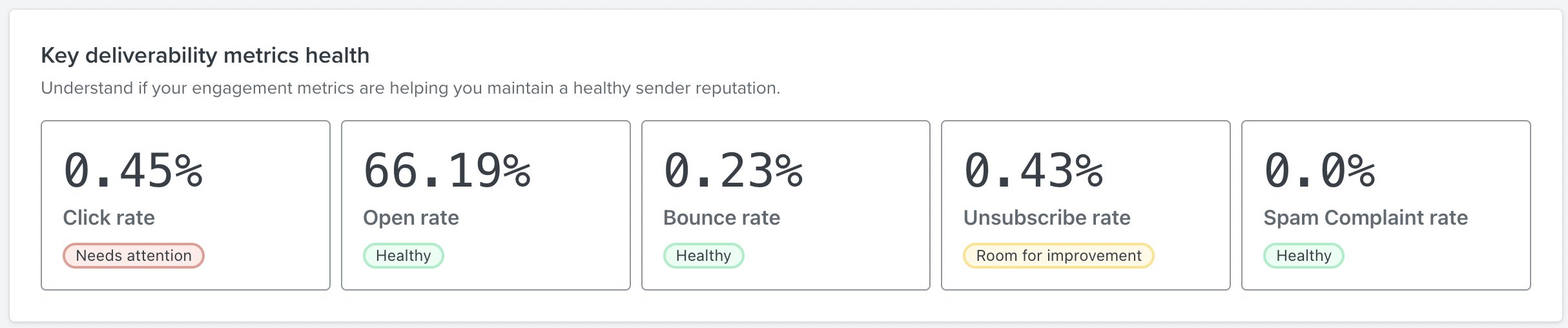
Image source: Klaviyo
This context matters. A campaign with unusually high opens isn’t always good news. It can indicate bot activity or spam filtering. Likewise, rising unsubscribes in a flow can signal fatigue long before engagement collapses.
Why this feature changes behaviour
Most marketers review performance after campaigns are sent. The Deliverability tab encourages real-time intervention:
Pause or adjust problematic flows
Reduce send frequency before damage spreads
Identify inbox-specific issues early
You don’t need to be a deliverability specialist to benefit from this feature. Klaviyo does the heavy lifting by flagging risk areas for you.
Bottom line: Deliverability is about avoiding problems, not just fixing them. This tab helps you stay ahead of inbox providers rather than reactive to them.
3. Product Feeds: Personalisation that scales
Personalisation doesn’t need to be complex to be effective. At a basic level, product feeds automatically populate emails with products from your catalogue, based on rules you define.
Product feeds are one of the simplest ways to make emails feel tailored without adding manual workload.
What you can do with product feeds
Display bestsellers or trending items
Highlight new arrivals
Recommend products based on behaviour
Feature category-specific collections
Promote low-stock or back-in-stock items
Once set up, these feeds keep emails relevant without requiring constant edits.
Where product feeds shine
Browse abandonment flows
Post-purchase cross-sell emails
Weekly or monthly newsletters
Seasonal promotions
They’re particularly useful when combined with behavioural triggers. Instead of showing any product, you show the right product at the right moment.
Bottom line: Product feeds bridge the gap between automation and relevance. They help emails stay dynamic while reducing the operational burden on marketing teams.
4. Smart Send Time Test: Stop guessing, start learning
Timing can be the difference between an email being opened or ignored.
Klaviyo’s Smart Send Time Test uses AI to determine when your subscribers are most likely to engage. It does this by testing different send times across a 24-hour window and learning from real performance data.
This is not the same as Smart Sending. Smart Send Time Test is exploratory, designed to help you discover the best send times for your audience.
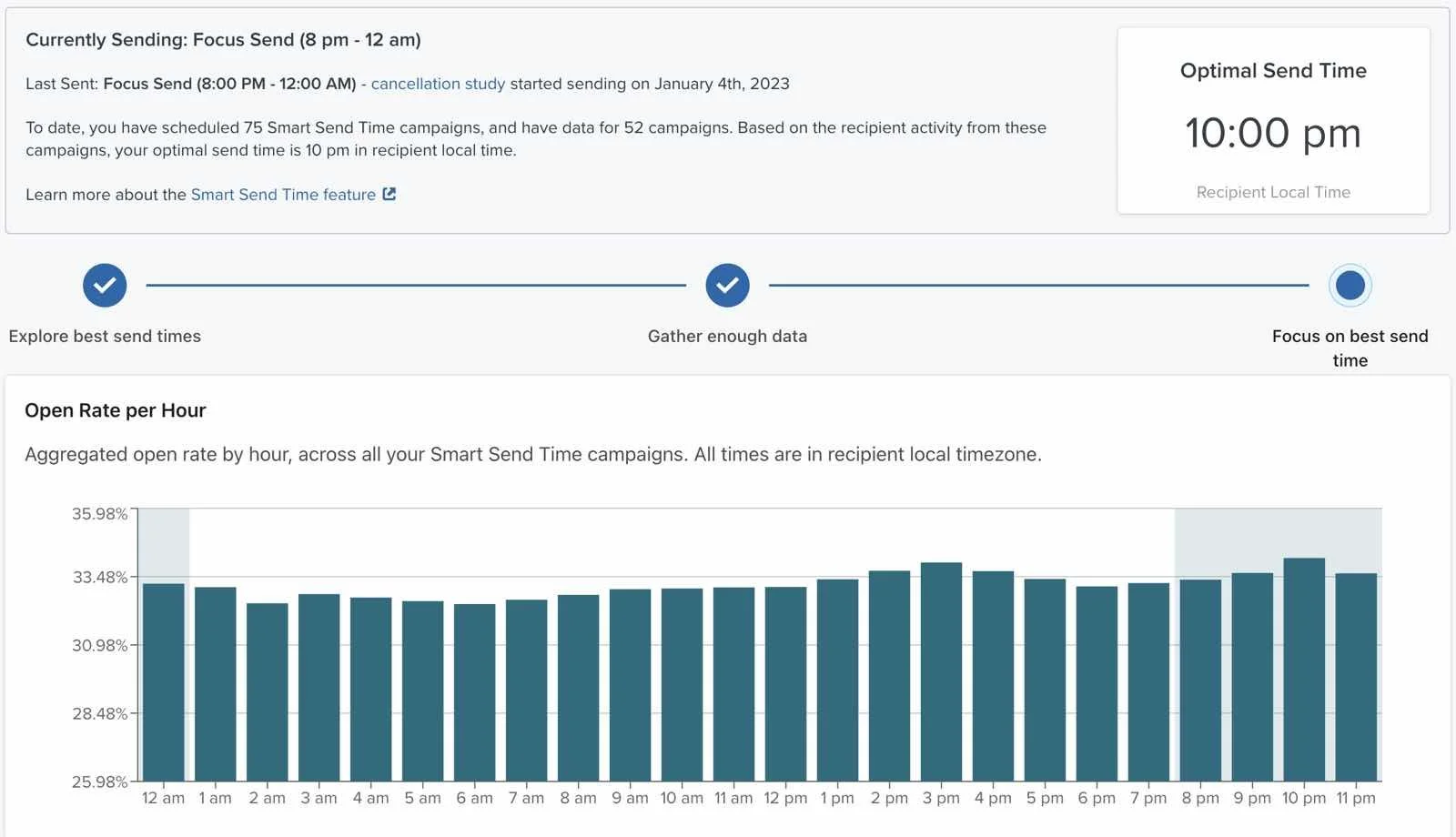
Image source: Klaviyo
Why this matters
Customer behaviour isn’t static:
Time zones matter for global audiences
Routines shift seasonally
Engagement patterns evolve as lists grow
Smart Send Time Test adapts to these changes instead of relying on fixed assumptions.
Key considerations
Requires a sufficient volume of active profiles (around 12,000+)
Works best when run across multiple campaigns
Should be reviewed periodically as behaviour changes
Analyse not just opens, but clicks and revenue, and use insights to shape your broader sending strategy.
Bottom line: The best send time isn’t universal. This feature lets your data decide rather than habit.
5. Subscriber Growth Tab: The reality check most brands skip
List growth is often measured by the number of people who sign up. But sign-ups alone don’t tell the whole story.
Klaviyo’s Subscriber Growth tab, found under Profiles → Audience, shows you where subscribers come from and how many you’re losing along the way.
What this view reveals
Sign-up sources across all entry points
Unsubscribes over time
Net list growth (the metric that actually matters)
This makes it easy to identify whether growth is healthy or artificially inflated.
Why this is critical
If your list is growing but engagement is falling, chances are:
You’re sending too frequently
Acquisition sources are misaligned
Expectations at opt-in aren’t clear
This tab helps diagnose those issues early and ties list growth directly to strategy decisions like cadence, content and acquisition quality.
Bottom line: Sustainable growth beats rapid growth. This feature ensures your list is actually moving forward, not just getting bigger.
Final Thoughts
Klaviyo is constantly evolving, and many of its most impactful features aren’t the ones that shout the loudest.
The five features we’ve spotlighted all support the same goal: smarter, more resilient retention marketing.
Rather than trying to implement everything at once, start with the feature that addresses your biggest bottleneck, whether that’s timing, data quality, deliverability or list health. Use it correctly, measure the impact, then build from there.
When Klaviyo is used intentionally, it can become the backbone of a retention strategy that adapts as your customers do.
If you’d like help unlocking more value from your Klaviyo account, or want a second set of eyes on how these features could work together, our team would be happy to help. Book a call or get in touch today.