BFCM List Growth: How to grow an audience that’s ready to buy
It’s never too early to start thinking about Black Friday.
Before the sales begin, before it even hits November, before the Halloween decorations come down and the tree goes up, that’s when the strongest BFCM audiences are won.
So when your sale launches (along with everyone else’s), shoppers already know your brand, the products they want and why they should buy from you instead of your competitors.
That’s the value of targeted pre-BFCM list growth. And a standard 10% off pop-up won’t cut it for peak shopping season.
Why list growth matters more before BFCM
BFCM is an expensive time to be meeting new customers. This is when ad costs climb, every brand is vying for attention, and social feeds start to feel like an endless parade of BLACK FRIDAY graphics.
Growing your email, SMS and WhatsApp audiences ahead of the sales period gives you a direct route to interested shoppers. Ones you can introduce products to, provide with answers to questions, and help to arrive at the decision to buy from you when discounts go live.
Someone only just discovering you through a Black Friday ad still needs to do their homework and decide whether they trust you before they commit, and you might not have the time for that.
List growth also isn’t only about collecting email addresses. It’s about giving the right shoppers a reason to stick around, then using the weeks ahead to build familiarity and learn what they’re interested in.
Your offer stops needing to do all the work, and just serves as a final nudge when your primed customers are ready to buy.
Start earlier than feels necessary
Klaviyo’s 2025 BFCM forecast surveyed 7,000 shoppers from around the globe and found that 40% began their holiday shopping between July and October, and another 40% between January and June. With so many customers already researching gifts before most brands discuss their Xmas campaigns, you can’t start prepping for BFCM too soon.
Always-on list growth should run throughout the whole year, but we recommend beginning focused BFCM acquisition around eight to twelve weeks before the sales season. Give yourself ample time to identify what works and refine it before the busiest acquisition period begins.
Eight to twelve weeks out (August/September): Test, test and test again. Start trying different pop-up formats, offers and sign-up angles while there is still time to see which combinations attract the right people.
We don’t recommend mentioning Black Friday yet, but this is a good time to gather data that will help inform your strategy later and amp up your acquisition approach.
Six to eight weeks out (late September/early October): Launch your waitlist. Promote your BFCM waitlist across your website and social channels, tease your offers and give customers an incentive to join early.
Three to five weeks out (mid-late October): Get to know each other. Use quizzes, preference forms and wishlists to collect specific interests, then use that information to send relevant recommendations before and during BFCM.
The final fortnight (November): Prep your subscribers for go time. Remind subscribers when early access begins and what advantages they will receive, encourage them to build their wishlists, add to cart and get ready to shop first.
For the wider planning timeline, read our 2026 BFCM checklist on Klaviyo’s blog, breaking the season into five phases.
Think beyond your 10% welcome discount
As BFCM gets closer, the standard welcome discount popup may lose some of its appeal. Customers probably know a larger promotion is coming and offering them 10% off now can feel a bit like trying to sell them an umbrella when the forecast says sun.
Switch up your offer to something that matters right now. You could promise early access, free delivery during the event, loyalty points for future savings or subscriber-only gifts.
Early access creates value without automatically cutting further into your margin. It can also attract shoppers who care about high-demand products, the ones that are due to sell out over BFCM, and that you already know they want because you gathered this data in your preference forms.
But be specific about what “early” means. Three hours? A full day? Access the evening before?
“VIP access” can sound appealing, but it is often too vague to be persuasive. Customers are more likely to sign up when they know exactly what access they’re getting and why it’s worth having.
Your popup is not the whole strategy
Popups work great for BFCM list growth. The problem isn’t the format itself; it’s putting all your faith into one generic form to handle every stage of the customer journey. Different approaches suit different aims. A small fly-out in the corner of the screen can serve as a light reminder of your list and offer without interrupting browsing. A banner can sit across the top of the page, whether on your website for early-access lists or within emails to incentivise SMS sign-ups. An embedded form can also link directly from socials to a dedicated BFCM landing page or waitlist.
Timing matters too. Use delays, scroll triggers and exit intent, so forms appear after someone has had a chance to browse. Nobody needs a popup before the homepage has finished loading, let them take their coat off first. Larger accounts that qualify for Klaviyo’s AI-powered Forms Display Optimisation can automate display-timing tests, but you can also test manually.
Mobile optimisation is crucial. Smartphones accounted for 56.4% of US online holiday transactions in 2025, so forms need to load quickly and be easy to read and complete on a smaller screen.
Collect interest, not just contact details
An email address tells you where to send a message, but it doesn’t tell you what that message should contain.
Product quizzes, wishlist builders and preference questions can turn a basic signup into something more useful. Ask visitors which categories they’re interested in, whether they’re looking for gifts, what their budget is, etc. That zero-party data can shape later campaigns, including targeted BFCM emails. You can pair that data with browsing habits once that customer is a contact too. Someone who’s only viewed trainers, for example, shouldn’t get shown the same hero product as someone who told you they’re looking for children’s gifts.
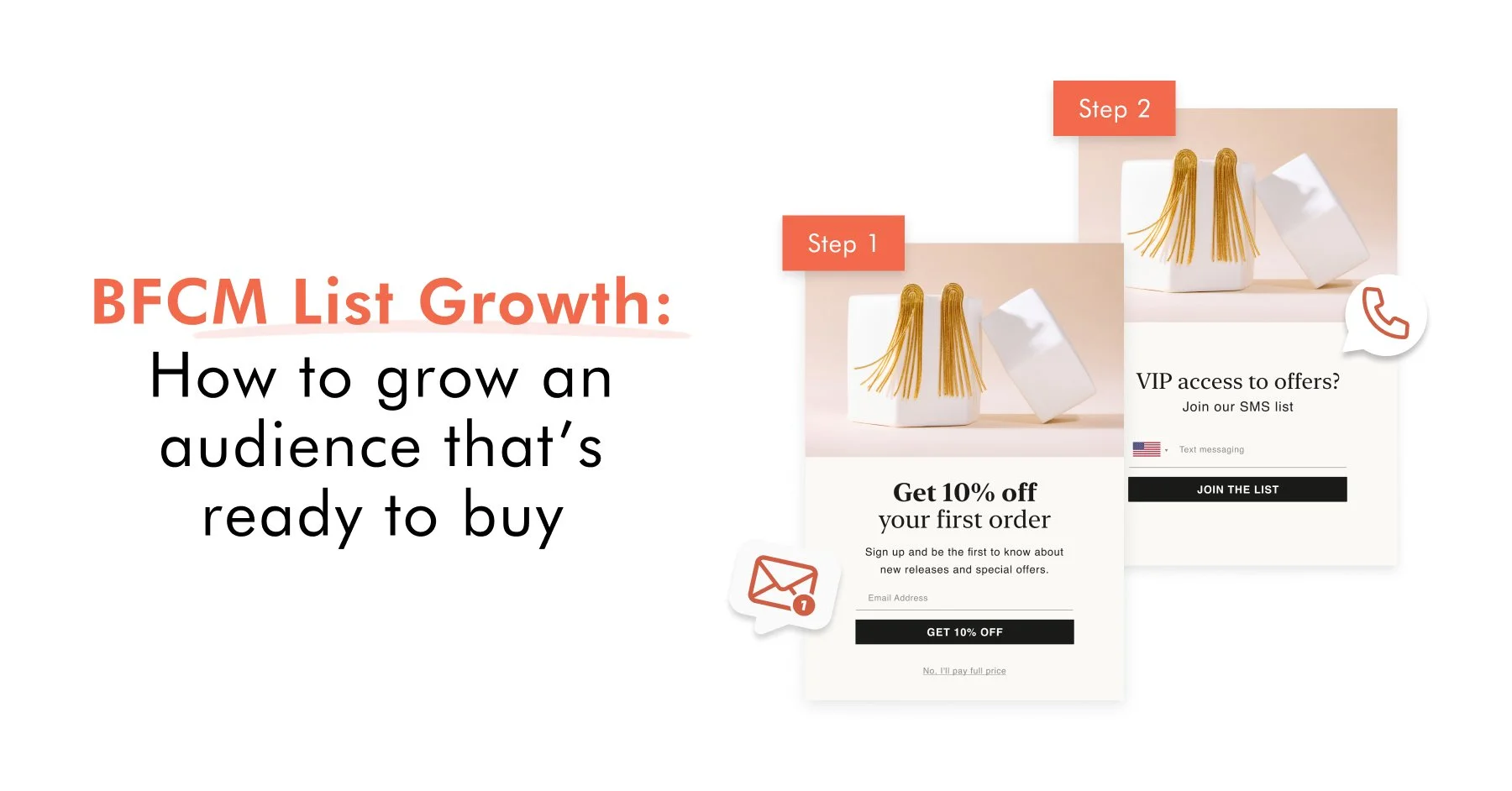
Multi-step forms let you collect customer information on signup without presenting a wall of fields upfront. Ask for the email address first, then move to an optional preference question or a separate SMS opt-in in case the added friction deters.
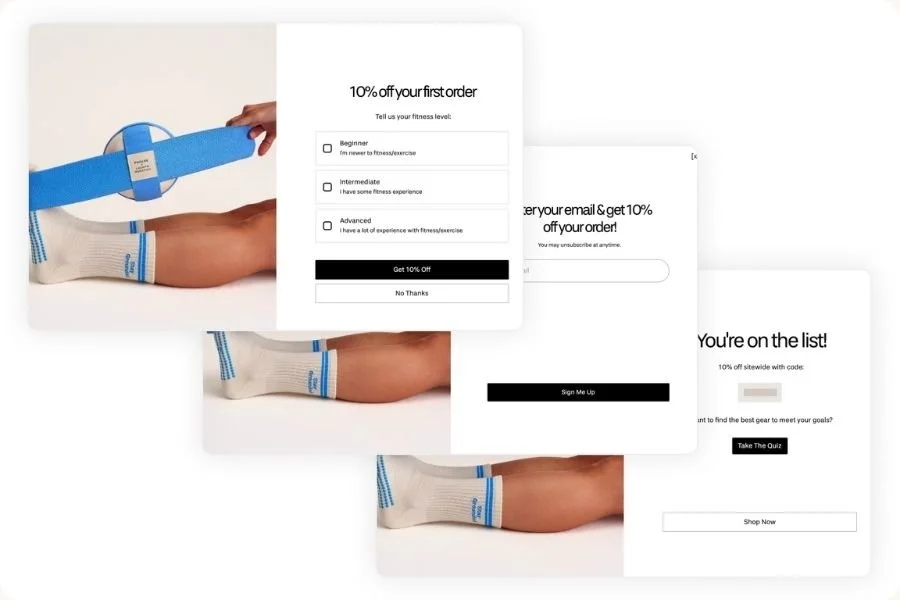
Image source: Digioh
Move social followers into owned channels
Your social followers already know, and possibly engage with, your brand, which makes them a natural audience for BFCM.
Give them a better reason to subscribe than “join our newsletter." Promote early access through Stories, Reels, and pinned posts. Create exclusivity with dedicated posts for followers, add your waitlist to your bio and use comment-to-DM campaigns to send the signup link automatically.
Contests help generate signups too, provided the prize makes sense. A skincare giveaway attracts potential skincare customers. A holiday to the Maldives attracts people who want a holiday to the Maldives.
Paid social can take the strategy further. Build lookalike audiences using your highest-value customers or most engaged subscribers, then direct those users to a dedicated BFCM page or in-platform lead form.
Quizzes can work particularly well for turning social followers into subscribers, giving people a more compelling reason to click through than a generic newsletter signup while helping you collect useful preference data from the start. And if you’re using K:Social, you can make that journey even easier by letting followers sign up without leaving the social app.
Whatever route you take, track the source. A quiz subscriber is showing different intent from a competition entrant.
Grow across channels, with permission
Email doesn’t need to carry the entire campaign. Throughout your BFCM list growth phase, you should be encouraging engaged email subscribers to join your SMS or WhatsApp channels with clear benefits that differentiate them from email.
However, every new channel creates a separate compliance responsibility. Your forms should clearly state which channel the customer is joining, what kind of messages they can expect and how they can opt out. Consent requirements also vary between markets, so keep this in mind as you’re building each form.
Keep a reliable record of how and when each person signed up, including the form they used and the permission they gave. Never use pre-ticked boxes or bury marketing consent inside wider terms and conditions. Joining the list should be a clear, deliberate choice.
Double opt-in can be useful for giveaways or unfamiliar lead sources. It helps remove invalid contacts while confirming that the subscriber genuinely wants to hear from you.
Compliance may make BFCM list growth feel slightly slower, but that is not necessarily a bad thing. A smaller list of people who knowingly asked to hear from you is more valuable than a database filled with typos, bots and giveaway entrants who never wanted your emails in the first place.
Don’t leave new subscribers hanging
A signup isn’t the end of your BFCM list growth strategy. It’s the start of the subscriber’s decision-making process.
The first email should confirm what they just signed up for: exclusive community access, a discount, a waitlist, etc. From there, you can introduce bestselling products, provide answers to common questions and help subscribers narrow down what they want, perhaps through building a wishlist or further preference questions.
The goal is to make your BFCM campaigns, or those to come, feel like the next part of an existing conversation, rather than a stranger arriving with a discount code.
Common BFCM list growth mistakes to avoid
A strong BFCM acquisition campaign is not just about collecting as many sign-ups as possible. It is about attracting people who are likely to engage, buy and remain useful to your brand during and after the sale.
Mistakes to avoid:
Chasing list size without considering subscriber quality
Starting acquisition only a few weeks before the sale
Asking for too much information at the first point of sign-up
Showing the same form and message to every visitor
Failing to track which forms, channels or campaigns generated each subscriber
Promising early access without delivering it
Overlooking how forms and landing pages work on mobile
Collecting sign-ups, then sending nothing until Black Friday
You can’t judge every tactic by sign-up volume alone.
A giveaway may generate thousands of profiles. A wishlist campaign may generate fewer. If the wishlist subscribers purchase at a much higher rate, that tactic is doing more valuable work.
Track list growth and form submissions, but also look at subscriber-to-customer conversion and how much BFCM revenue came from people acquired during the lead-up, to inform next year’s approach.
Final thoughts
Your BFCM campaign begins long before your first sale email.
When someone joins from Instagram, saves a product or scans a QR code in-store, all of these interactions help you learn what your customers want so you can make your offers and targeting more relevant.
Your catch-all popup should still play a part; it just shouldn’t be the entire plan.
Start earlier and give people a good reason to subscribe. Collect only information you can genuinely use and help new subscribers decide what they want before any offers are live. Then, when the sale begins, you won’t need to rely on shoppers discovering your brand during the busiest week of the year.
If you need help building a BFCM acquisition strategy that connects list growth with retention, our Klaviyo experts can help you put the right foundations in place before the busiest shopping period begins